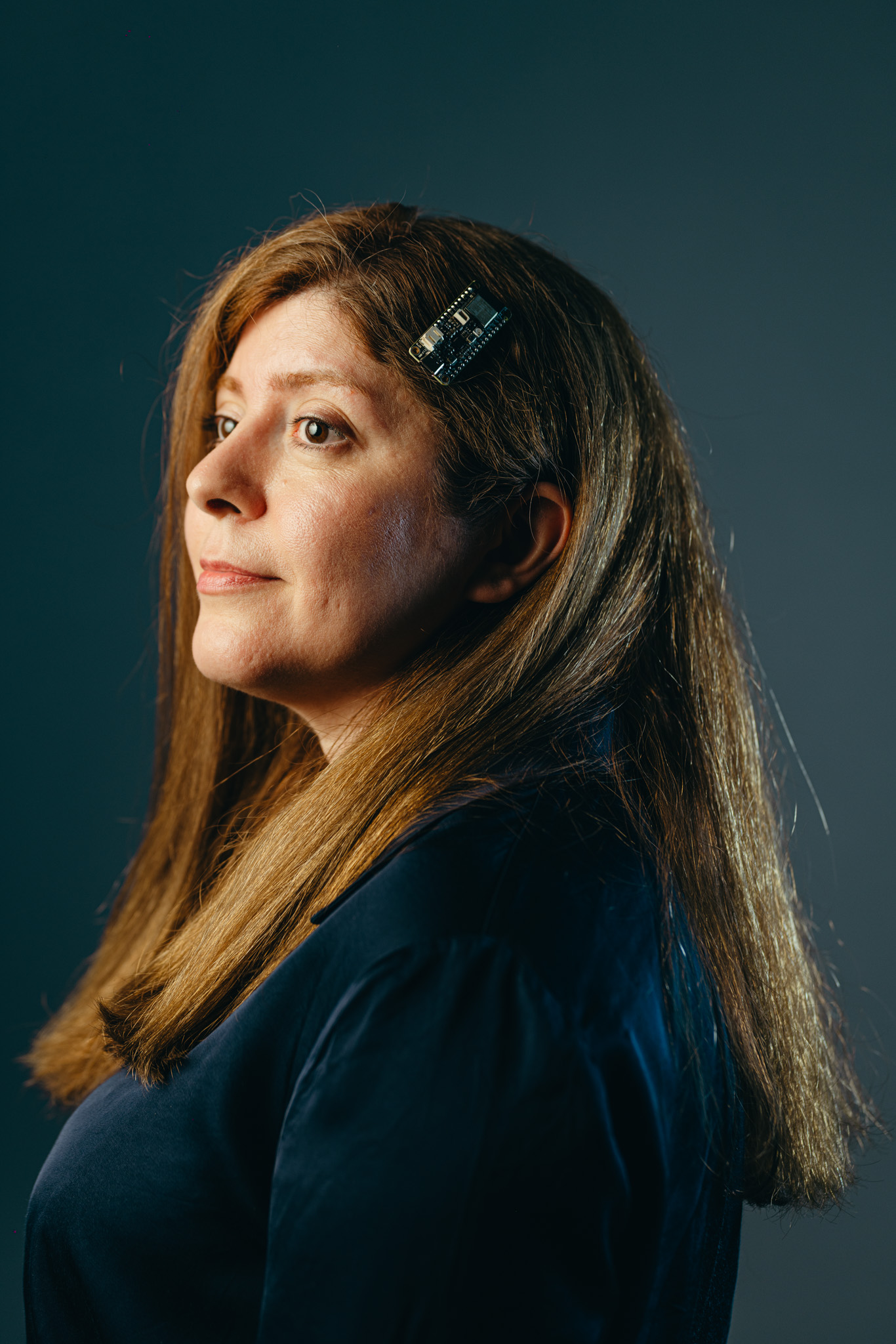
Profile and Research Interests
My research interests include, but are not limited to: Modelling & Simulation, Self-adaptive Systems, Digital Twins, and Model Validation.
See my publications below.
Biography
I am currently a postdoctoral researcher in the programming and software engineering group of Prof. Judith Michael at University of Regensburg (Bavaria, Germany). Before joining Regensburg, I was a postdoctoral researcher in the Cosys-Lab research group of Prof. Joachim Denil at the University of Antwerp (Belgium), where I also completed my PhD in Applied Engineering under his supervision between 2021 and 2025.
My work bridges Computer Engineering and System Engineering, with emphasis on performance modelling and surrogate modelling. I am experienced in interdisciplinary collaboration, teaching, and science communication, and I am open to new challenges in innovation and technology where I can apply my expertise to create impactful solutions.
My dissertation, Foundations for Self-Adaptive Abstraction and Approximation in Digital Twins with Real-time Requirements, is available here.
I received my Master’s and Bachelor’s degrees in Computer Engineering (Software), and have about seven years of industry experience at companies such as ICAN Company (software solutions) and MCAC Company (banking services and solutions).
Teaching
University of Antwerp, Belgium
- TA: Cyber-Physical Systems I, Digital Twin Lab (Prof. dr. Joachim Denil), 2023–2024
- TA: Cyber-Physical Systems I, Functional Safety Lab (Prof. dr. Joachim Denil), 2023–2024
- TA: Numerical Modelling and Simulation (Prof. dr. Joachim Denil), 2021–2023
- Co-promoter of Bachelor’s and Master’s theses
Amirkabir University of Technology, Iran
- TA: Advanced Algorithms (Prof. dr. Alireza Bagheri)
University of Applied Science and Technology, Iran
- Fundamentals of Programming; Object-Oriented Programming; Software Engineering II; Data Structures & Algorithms; Databases; Linux; Technical and Scientific Presentation; Academic English
Publications
2026
- [PDF] Biglari, Raheleh, Joachim Denil, and Cláudio Gomes. 2026. “Validity Frames for Self-Adaptive Systems.” Proceedings of the 14th International Conference on Model-Based Software and Systems Engineering, 434-41. https://doi.org/10.5220/0014461300004058.
Abstract
Validity Frames are a key concept in modelling and simulation, encoding the contexts in which models provide valid results. This position paper explores how Validity Frames propagate through optimisation processes and affect self-adaptive systems. We demonstrate that optimisers inherit constraints from model Validity Frames and generate their own validity conditions for the configurations they produce. These propagated Validity Frames can be formalised as software contracts with explicit assumptions and guarantees. Using a semi-active suspension system as a running example, we show how Validity Frames constrain design space exploration, enable runtime monitoring of validity boundaries, and support informed adaptation strategies. Our approach reveals a fundamental tradeoff between optimality and applicability: configurations optimised for narrow scenarios may achieve peak performance but fail when conditions change, while configurations evaluated across broader Validity Frames sacrifice peak performance for robustness. By explicitly tracking Validity Frames throughout the optimisation process, self-adaptive systems can reason about when adaptation is needed and select configurations appropriate to their current operational context. The full formalisation of validity frames into contracts and their composition, which allows for the precise integration of assumptions and guarantees across models, optimisers, and adaptive components, will be our main future work path.
2025
- [PDF] Biglari, Raheleh, Cláudio Gomes, and Joachim Denil. 2025. “Towards a Validity Frame of Multi-Modal Surrogate Models for Traffic Simulation.” 2025 Annual Modeling and Simulation Conference (ANNSIM), May, 1-13. https://ieeexplore.ieee.org/abstract/document/11214513.
Abstract
Multi-modal systems, such as urban traffic networks, require considering specific modeling considerations for varying operational and environmental conditions. Surrogate modeling offers a practical solution to represent these modes through different surrogate models. However, switching between modes needs careful management of the models’ experimental frames. In multi-model setups, overlap between these frames introduces unnecessary complexity and ambiguity in model selection. The concept of validity frame of multi-modal surrogate models is the model’s experimental frame plus the process allowing to change this frame. This paper introduces an approach to define such a validity frame ensuring that the union of all experimental frames covers the full system operating domain without redundancy and focusing on clean separation between models and interpretable mode switching. The proposed ensemble of surrogate models, coupled with adaptive techniques, represents a significant step forward in the performance modeling of dynamic and computationally expensive models.
2024
- Ali, Z., R. Biglari, J. Denil, J. Mertens, M. Poursoltan, and M. K. Traoré. 2024. “From Modeling and Simulation to Digital Twin: Evolution or Revolution?” SIMULATION 100 (7): 751–69.
2023
- Biglari, Raheleh, and Joachim Denil. 2023. “Real-Time Adaptive Abstraction and Approximation Using Validity Frames: An Experience Report.” arXiv:2303.07144.
2022
- Biglari, Raheleh, and Joachim Denil. 2022. “Model Validity and Tolerance Quantification for Real-Time Adaptive Approximation.” In Proceedings of the 25th International Conference on Model Driven Engineering Languages and Systems: Companion Proceedings (MODELS ’22). Montreal, Canada.
- Biglari, Raheleh, J. Mertens, and Joachim Denil. 2022. “Towards Real-Time Adaptive Approximation.” In 11th European Congress Embedded Real Time Systems (ERTS 2022). Toulouse, France.
2014
- Biglari, Raheleh, and Alireza Bagheri. 2014. “PPreDeCon: A Parallel Version of Preference Density Connected Clustering Algorithm.” International Journal of Computer Applications 107 (1): 22–26.